
Antioxidants are compounds that can help neutralize free radicals. In plants, this antioxidant potential is often associated with naturally occurring phytochemicals such as phenolic compounds, flavonoids, and other secondary metabolites.
Lempuyang Wangi (Zingiber aromaticum) is one botanical that has attracted attention for its antioxidant potential. A study published in the 19th University Research Colloquium 2024 investigated the antioxidant activity and total phenolic content of Lempuyang Wangi leaf extract and its fractions.
The study used the DPPH free radical scavenging assay to evaluate antioxidant activity and the Folin-Ciocalteu method to determine total phenolic content.
What Does the Research Say?
The research found that the ethanol extract and its fractions showed different antioxidant activities.
Among the tested samples, the ethyl acetate fraction showed the lowest IC50 value at 224.89 µg/mL, followed by the n-hexane fraction at 255.24 µg/mL and the ethanol extract at 276.75 µg/mL. Vitamin E, used as the positive control, showed a much lower IC50 of 6.488 µg/mL.
The study also found differences in total phenolic content. The ethyl acetate fraction had the highest total phenolic content at 94.309 mg GAE/g sample, followed by the ethanol extract at 55.876 mg GAE/g, ethanol fraction at 35.559 mg GAE/g, and n-hexane fraction at 20.552 mg GAE/g.
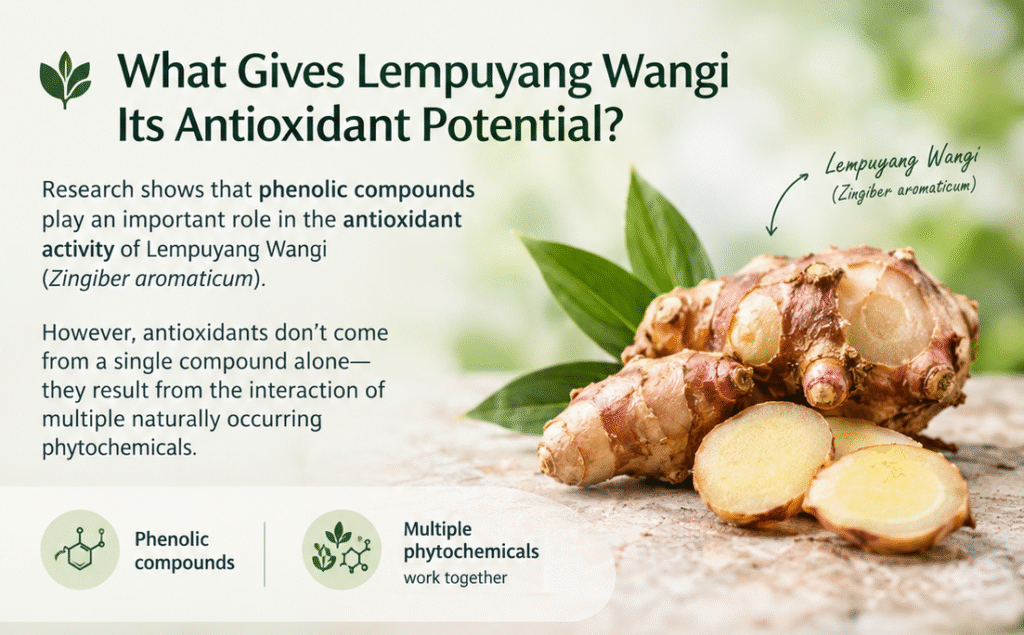
Interestingly, statistical analysis showed an R² value of 0.4631, indicating that approximately 46.31% of the variation in antioxidant activity was associated with total phenolic content, while the remaining 53.69% may be related to other compounds.
This suggests that phenolic compounds play an important role in the antioxidant activity of Lempuyang Wangi leaves, but they are not the only contributors.
Why Are Phenolic Compounds Important?
Phenolic compounds are naturally occurring plant compounds that are widely associated with antioxidant activity.
In the Lempuyang Wangi study, the fraction with the highest phenolic content—the ethyl acetate fraction—also demonstrated the strongest DPPH radical-scavenging activity among the tested Lempuyang Wangi samples. The researchers noted that many phenolic compounds were extracted into the semi-polar ethyl acetate fraction.
However, the correlation analysis indicates that phenolic compounds alone do not fully explain the antioxidant activity. Other naturally occurring phytochemicals may also contribute to the observed activity.
Potential Applications
Based on its phytochemical profile and in vitro antioxidant activity, Lempuyang Wangi may be explored as a botanical ingredient for:
- Antioxidant-focused formulations
- Herbal and botanical products
- Functional food & beverage concepts
- Nutraceutical formulations
- Botanical ingredient research and development
However, the findings are based on a DPPH in-vitro assay using leaf extracts and fractions. Further research, including additional antioxidant assays and appropriate biological or clinical studies, would be needed to determine its effectiveness in specific product applications.
From Botanical Potential to Functional Ingredients
The research highlights an interesting characteristic of Zingiber aromaticum: its antioxidant potential appears to involve more than a single phytochemical group.
With 46.31% of the antioxidant activity associated with total phenolic content, phenolic compounds appear to be an important contributor, while other compounds may also play a role.
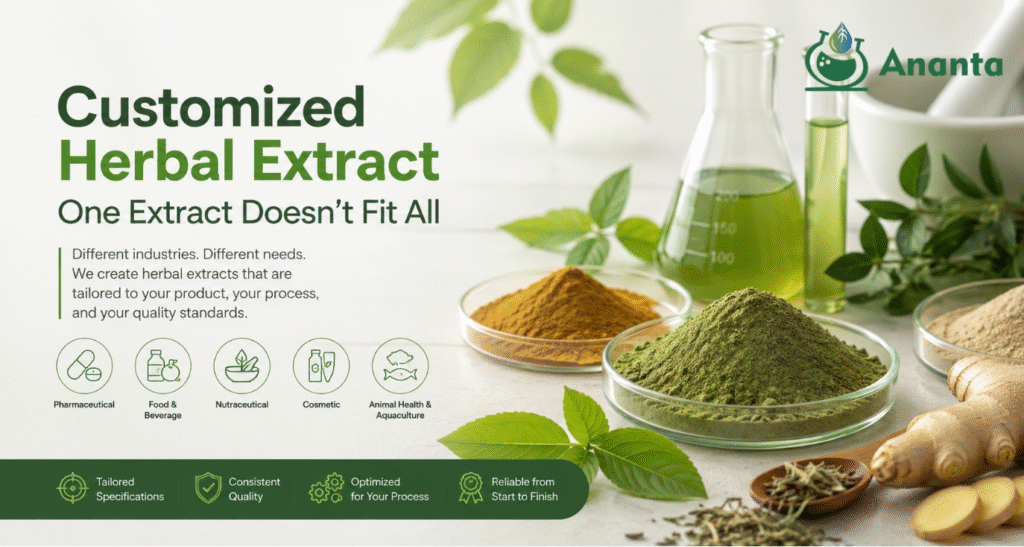
For manufacturers, understanding this phytochemical profile can help guide the development of consistent and application-specific Lempuyang Wangi extracts, particularly when parameters such as extraction method, marker compounds, and extract specifications need to be controlled.
Looking for customized Lempuyang Wangi extract for your formulation?
Ananta provides herbal extract solutions tailored to your specific requirements.
Source
Cheleng, N. & Hanwar, D. (2024). DPPH Free Radical Scavenging Activity of Lempuyang Wangi Leaves (Zingiber aromaticum. Val) Extracts and Fractions. The 19th University Research Colloquium 2024, Universitas Muhammadiyah Surakarta, pp. 347–353.