
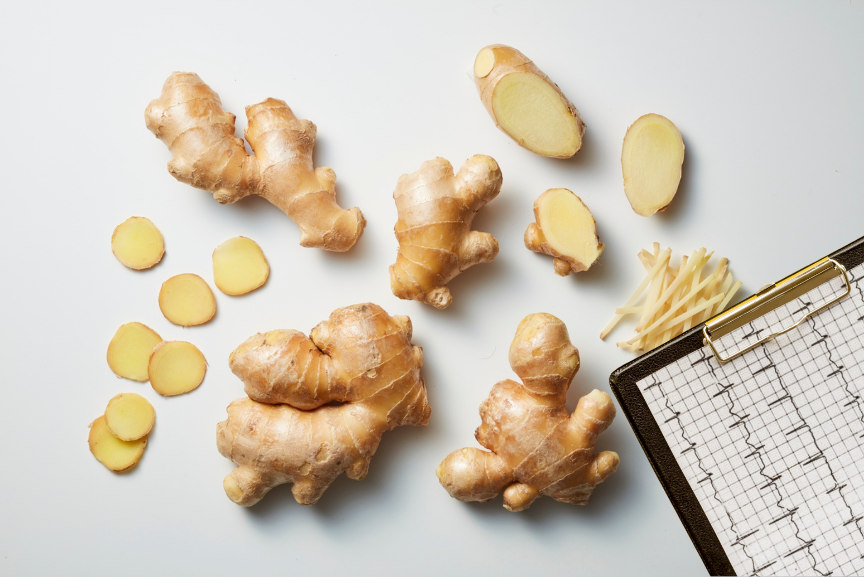
High blood pressure affects millions worldwide—yet one of the most promising natural supports may come from a small, fiery-red rhizome found across Asia: Red Ginger. Known for its potent bioactive profile, this herbal ingredient has gained increasing scientific attention as a natural antihypertensive agent.
What Makes Red Ginger Special?
Red ginger (Zingiber officinale var. rubrum) contains higher concentrations of gingerol and shogaol compared to regular ginger. These compounds give it a stronger pharmacological profile, contributing to antioxidant, anti-inflammatory, immunomodulatory, and cardiovascular benefits.
For centuries, red ginger has been used in Asian herbal medicine to treat:
• headaches
• digestive disturbances
• bacterial infections
• fever
• autoimmune complaints
• even as supportive therapy in cancer
How Red Ginger Works for Hypertension
According to Yunas et al. (2024), red ginger affects blood pressure through multiple mechanisms:
A. Anti-Inflammatory Action
Gingerol & shogaol inhibit inflammatory mediators such as:
- cytokines
- chemokines
- leukotrienes
- prostaglandins
Via suppression of:
- COX-1
- COX-2
- 5-lipoxygenase (5-LO)
B. ACE (Angiotensin-Converting Enzyme) Inhibition
Zingerone, gingerol, and shogaol help reduce ACE activity — which is essential because ACE is responsible for blood vessel constriction.
➡ Research showed 10.80% ACE activity reduction in rats at a dose of 360 mg / 200 g body weight.
C. Vasodilation & NO Regulation
Red ginger promotes vasodilation by:
- enhancing nitric oxide (NO) production
- preventing excessive NO accumulation
- improving endothelial (vascular) function
➡ Result: smoother blood flow & reduced vascular resistance.
Why Red Ginger Is Recommended
The combined anti-inflammatory action, ACE inhibition, and vasodilation provide a multi-pathway approach that is more holistic than relying on single-mechanism drugs. Red ginger extract is an excellent natural adjunct for hypertension management thanks to its ability to:
- relax and widen blood vessels
- reduce inflammatory load
- support cardiovascular function
- help regulate blood pressure naturally
This makes it a strong candidate for protective use or complementary therapy.
Source :
Yunas, R. W., Rahmawat S. I., Saputri, F. C., Bayu A., Chianese G., Pura M. Y. 2024. Roselle and Red Ginger: A Potential Combination of Medicinal Plants for Hypertension Therapy. Pharmaceutical Sciences and Research (PSR), 11(3), 118–134.