
In the aquaculture industry, particularly in the cultivation of white shrimp (Litopenaeus vannamei), one of the biggest challenges is disease caused by viruses and bacteria. As farming scales increase, pond environmental conditions deteriorate, leading to higher disease intensity affecting shrimp (Lu et al., 2017). Traditionally, antibiotics and chemicals have been widely used to combat diseases, but this approach has negative impacts on the environment and human health. Therefore, alternative, more eco-friendly, and sustainable solutions are needed.
Andrographis paniculata as an Immunostimulant in Aquaculture
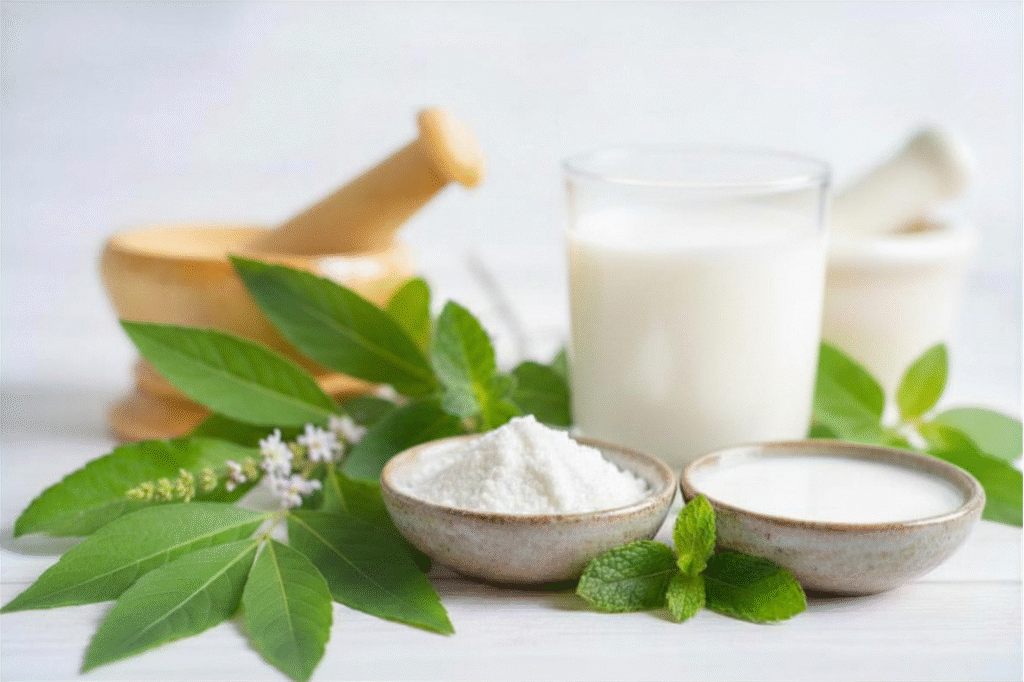
Andrographis paniculata (AP), commonly known as the “King of Bitters,” is a medicinal plant widely used in traditional Asian medicine. In modern pharmacology, Andrographis paniculata is known to have various benefits, including anti-inflammatory, antimicrobial, and immunostimulant properties (Akbar, 2011).
Several studies have demonstrated the potential of Andrographis paniculata in enhancing the immune system of aquatic animals. For example, dietary supplementation with Andrographis paniculata improved the survival rate of Nile tilapia after infection with Streptococcus agalactiae. Additionally, a combination of Andrographis paniculata with other herbs has been shown to enhance growth and immune response in Penaeus monodon against Vibrio harveyi (AftabUddin et al., 2017).
Study on the Use of Andrographis paniculata in White Shrimp
A recent study investigated the effects of dietary Andrographis paniculata supplementation on the growth, immune system, and disease resistance of white shrimp (L. vannamei) against Vibrio alginolyticus. In this study, four diet formulations were administered with Andrographis paniculata at doses of 0% (control), 0.25%, 0.5%, and 1% for 28 days. The results showed that dietary Andrographis paniculata improved both growth performance and non-specific immune function in white shrimp.
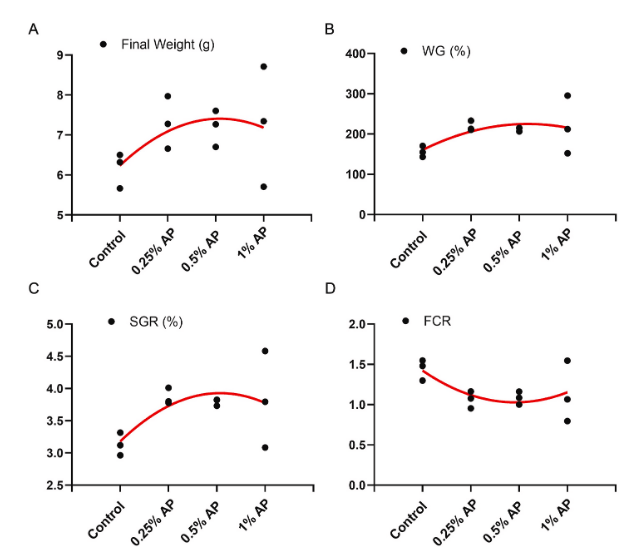
(Yin et al., 2023
When challenged with V. alginolyticus infection, shrimp fed with AP-containing diets exhibited significantly higher survival rates compared to the control group. Furthermore, hepatopancreas damage in the AP-fed shrimp was lower than in the control group at 6 hours post-infection. Additionally, reactive oxygen species (ROS) accumulation and O2− production in the hepatopancreas due to V. alginolyticus infection were significantly reduced after feeding with Andrographis paniculata at 0.25% and 0.5% doses (p < 0.05).
Moreover, Andrographis paniculata plays a role in apoptosis regulation. Shrimp fed with Andrographis paniculata showed upregulated expression of pro-apoptotic genes (Bax, Caspase 3, p53) and downregulated expression of anti-apoptotic genes (Bcl-2) after V. alginolyticus infection, indicating Andrographis paniculata’s role in oxidative stress regulation and cellular response to infection.
Implications for the Aquaculture Industry
Based on research findings, Andrographis paniculata has been proven to enhance the growth and immune system of L. vannamei, as well as protect shrimp against Vibrio alginolyticus by reducing oxidative stress and apoptosis. These findings present a significant opportunity for the aquaculture industry to adopt more natural and sustainable approaches to disease prevention in shrimp farming.
As an alternative to antibiotics, the use of Andrographis paniculata in shrimp feed not only contributes to increased production but also supports environmentally friendly farming practices. With further research into the benefits of Andrographis paniculata, its application in aquaculture is expected to be optimized, improving shrimp resilience against diseases without harming the ecosystem.
Source :
AftabUddin Sheikh , Siddique M. Q., Romkey S. S., William L. Shelton. 2017. Antibacterial function of herbal extracts on growth, survival and immunoprotection in the black tiger shrimp Penaeus monodon, Fish & Shellfish Immunology. 65 : 52-58, https://doi.org/10.1016/j.fsi.2017.03.050.
Akbar S. 2011. Andrographis paniculata: a review of pharmacological activities and clinical effects. Altern Med Rev. 16(1):66-77. PMID: 21438648.
Lu Jie, Yanyan Shi, Shuhui Cai, Jianghua Feng. 2017. Metabolic responses of Haliotis diversicolor to Vibrio parahaemolyticus infection. Fish & Shellfish Immunology. Volume 60 : 265-274. https://doi.org/10.1016/j.fsi.2016.11.051.
Yin, X., Zhuang, X., Liao, M., Cui, Q., Yan, C., Huang, J., Jiang, Z., Huang, L., Luo, W., Liu, Y., & Wang, W. (2023). Andrographis paniculata improves growth and non-specific immunity of shrimp Litopenaeus vannamei, and protects it from Vibrio alginolyticus by reducing oxidative stress and apoptosis. Developmental & Comparative Immunology, 139, 104542. https://doi.org/10.1016/j.dci.2022.104542